


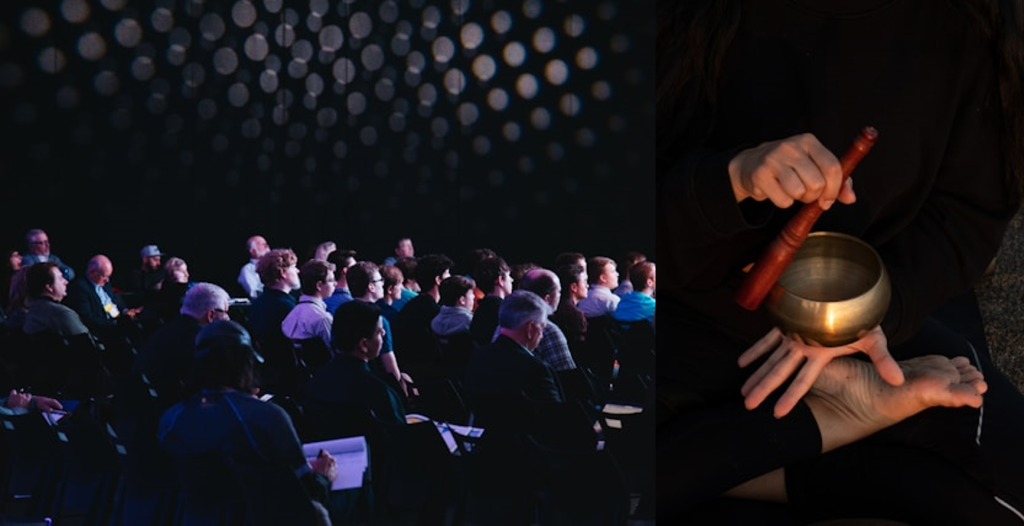


We create the space to be heard, not explained to. Everyone speaks. Everyone listens. We go out knowing better what we need to do“
The prospect of association dissolution has a powerful way of clarifying purpose. At least it did for the Association of Sustainability Practitioners (ASP) who, several years ago, were called to answer a difficult question:
“What does the world look like without ASP?”
Rather than shutting down the organisation, openness to contemplate the hard question led to a renewed purpose. One that allowed ASP to more confidently define its role: to provide sustainability professionals with the space to safely explore the challenges on their journey.
“The prospect of killing off the organisation enabled an evolution. It helped ASP realise how much the community needs to be connected, challenged and supported,” states Gwyn Jones, director.
Jones describes how providing deep listening spaces–such as Wisdom Councils and member meetings–have been key to achieving this purpose, and help members make sense of what they are experiencing.
The approach is simple, but the outcome is high-value for members. Invitations to these gatherings include a prompt or topic that will be discussed. Members then convene online around a symbolic children’s fire. “The fire is a reminder of what is at the heart of the work: care and concern for the next generation.”
Using an Indigenous talking stick model, participants offer their thoughts on the prompt for the first hour of the session. Using the same approach, a second reflection is shared, based on the initial round of discussion.
For associations not used to this type of organic, Indigenous-informed approach, the process can seem scary.
Jones describes how for ASP there was little option other than evolution:
“Our organisation is wanting to become something. And these meetings are key to learning what that is for ourselves as Directors with our members. It’s a community, not a network. It is about relationships. Relationships provide safe space. They nurture.”
Jane Shaw, ASP director, describes how many people arrive at ASP through traditional and functional channels, such as training programs or online learning sessions.
“These channels allow people to experience if our culture is a fit for them. Some find it isn’t. But if they do, they can determine how to take advantage of the opportunities we create to try things safely. Once they’re successful, they can then take the knowledge they gain, or products they create out to their communities, workplaces and networks.”
While ASP hosts in-person and online gatherings, “conference” is not a term used to describe what they do. This is somewhat by design. “Conferences have not proven a sustainable model,” says Jones. And, over time, many associations may wind up sustaining conferences as an outcome unto themselves. So, rather than a means to an end, the event itself becomes the purpose. This, in turn, can cause resistance to change, reinforcing old ways of doing.
Jones offers a different word for ASP gatherings that better reflects the psychological context provided to members: singing bowls, referring to objects commonly used in meditation and for personal healing.
“We desire an inspiring future together. Creating that starts with ‘I don’t know’. Then, we create the bowl for people. But really, the bowl isn’t important. It’s what happens in and around it. It’s about people, and opening their heart space. It’s hard, but it feels right. And if it feels right and you have the means, you find the will.”
See the full article: “FROM OUTSIDE-IN TO INSIDE-OUT. A PSYCHOLOGICAL APPROACH TO CHANGE-MAKING MEETINGS” by Shawna McKinley HERE
Published with permission from AMI MAGAZINE.GLOBAL
See the full edition “THE OVERTOURISM CONUNDRUM. Can association meetings help turn the tide?” HERE